
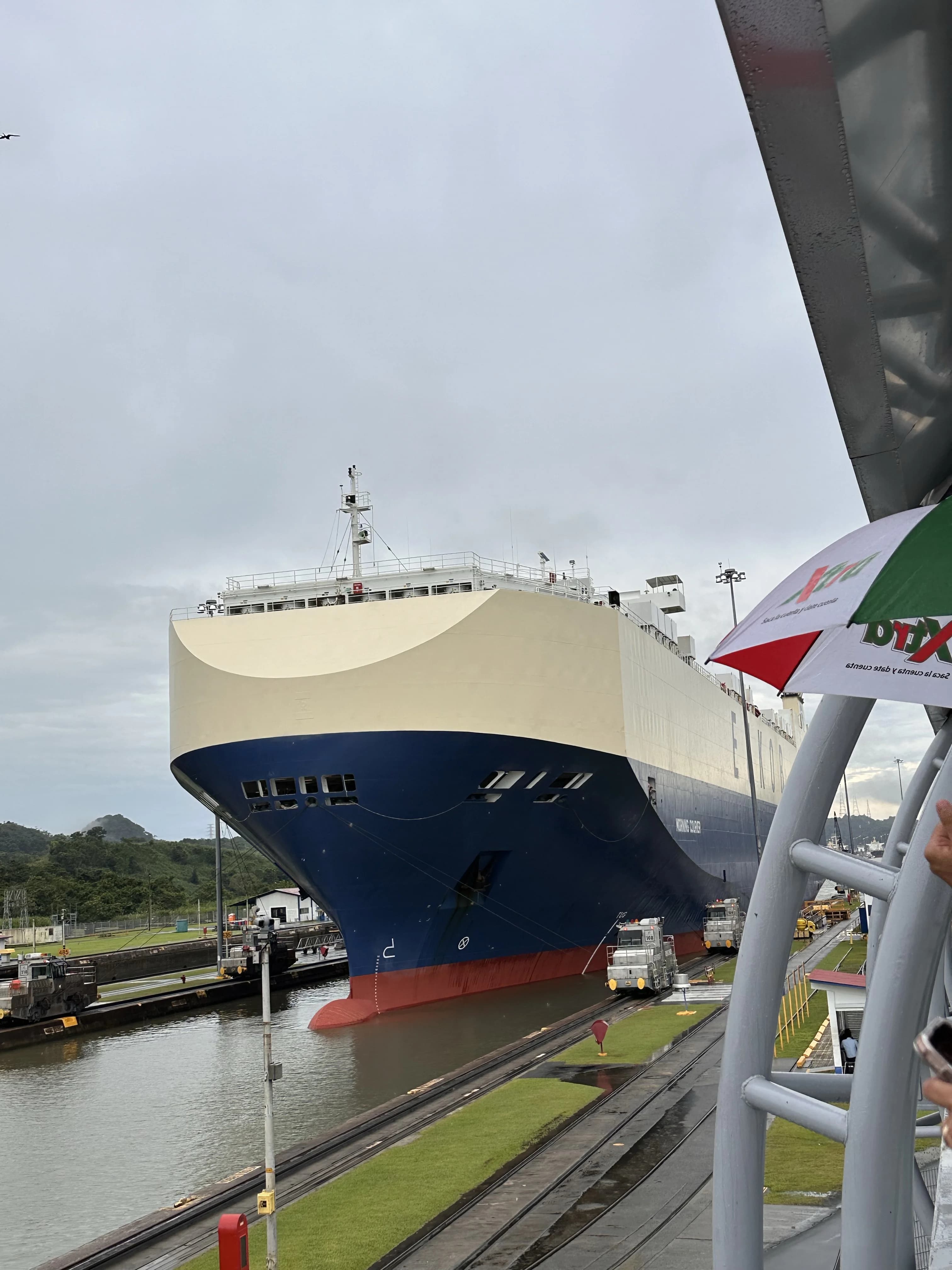
112 years of the Panama Canal
Four centuries of attempts, twenty-five thousand dead and a steamship called Ancon. The story of the engineering project that split a continent — told from Panama.

On August 15, 1914 the steamship SS Ancon sailed from Cristobal to Balboa and became the first vessel to officially transit the Panama Canal. It left at 7:10 in the morning, arrived at 4:50 in the afternoon, and carried around 200 people — among them Captain John Constantine and Panama's president Belisario Porras.
Today marks 112 years. And August 15 happens to be doubly Panamanian: in 1519, Pedrarias Dávila founded the city of Panama on this same coast — the first Spanish settlement on the American Pacific. Two anniversaries, one date.
The idea had been circling for four centuries
This wasn't a twentieth-century brainwave. In 1534, Charles V of Spain ordered the first serious survey of a route across the isthmus. The geography was too tempting: at its narrowest, barely 80 kilometres separate the Caribbean from the Pacific.
The trouble is that those 80 kilometres contained a mountain range, a rainforest and two of the deadliest diseases of the age. The Spanish settled for the Camino Real and the Camino de Cruces: mule trains hauling Peruvian silver from one ocean to the other. Panama was a place of passage for centuries before the Canal existed. The Canal only formalised what geography had already decided.
The French disaster (1880-1900)
The first to try was Ferdinand de Lesseps, the engineer behind the Suez Canal. He arrived in 1880 with enormous prestige and one wrong idea: repeat Suez — a sea-level canal, no locks.
Suez crossed a flat desert. Panama meant cutting through the Continental Divide and taming the Chagres river, which in the rainy season turns into a monster. The French worked for twenty years. Yellow fever, malaria and financial collapse finished the project: an estimated 20,000 workers died.
The detail that sounds unbelievable today:no one yet knew mosquitoes carried yellow fever. In the French hospitals, bed legs were placed in buckets of water so ants couldn't climb up to the patients. Those buckets were perfect Aedes aegypti nurseries. The hospital was infecting its own patients.
The American construction (1904-1914)
In 1903 Panama and the United States signed the treaty under which Washington took on the work. The following year the US bought the French company's rights and property for $40 million and began digging. The project was finished in ten years at a cost of roughly $387 million in the money of the day.
The Canal Authority sums the challenge up as three problems: engineering, sanitation and organisation. The names attached to solving them are John F. Stevens and Colonel George W. Goethals (engineering and management) and Colonel William C. Gorgas, who took on the health crisis. From 1905, with the anti-mosquito campaign under way, mortality collapsed. Even so, the American era cost around 5,600 lives.
What got built was not a sea-level canal but a hydraulic system: a lock canal that lifts ships 26 metres up to Gatun Lake — at the time the largest dam in the world — carries them across the lake and through the Culebra Cut, and lowers them back down to the other ocean. That change of approach, from the French sea-level plan to a lock canal, is the main reason one attempt failed and the other didn't.
A part that rarely gets told: the workforce was international, and heavily West Indian. Thousands came from Barbados, Jamaica, Martinique and Guadeloupe. Their descendants are an essential part of modern Panama, and the reason this country eats saus, dances calypso and has English surnames along the Caribbean coast.
August 15, 1914: the day of the Ancon
At 7:10 in the morning the steamship SS Ancon left the port of Cristobal on the Atlantic side. At 4:50 in the afternoon it reached Balboa on the Pacific. In between it had crossed the Gatun locks, the lake, the Culebra Cut and the Pedro Miguel and Miraflores locks. Nine hours and forty minutes to do what had previously required sailing around an entire continent.
It should have been the story of the year. It wasn't. The First World War had broken out two and a half weeks earlier and Europe was looking elsewhere. The opening of the most ambitious engineering project of its time went almost unnoticed in the international press.
To grasp the scale of the change: before the Canal, New York to San Francisco by sea meant rounding Cape Horn, a voyage that could take up to two months. Today, according to the Canal Authority, the US East Coast to Asia via Panama is about 26 days, against 43 via Cape Horn.
From the Canal Zone to Panamanian sovereignty
This is where the story stops being about engineering and starts being about politics. The 1903 treaty granted the United States a strip of territory — the Canal Zone — that cut the country in half and operated under American law. For decades, a Panamanian crossing his own country effectively entered another one.
That wound defines much of Panama's twentieth century and explains dates everyone here knows: January 9, 1964, when a dispute over flying the Panamanian flag in the Zone ended in deaths and became Martyrs' Day.
The resolution came on September 7, 1977 with the signing of the Torrijos-Carter Treaties at the OAS headquarters in Washington. Panama approved them by referendum on October 23 that year and they entered into force on October 1, 1979, opening a twenty-year transition. From January 1, 1990 the Canal administrator was, for the first time, Panamanian.
On December 31, 1999, at noon, Panama assumed full responsibility for the waterway. It is run by the Panama Canal Authority, an autonomous entity created by the constitution and organised under Law 19 of 1997. If you visit and wonder why the Canal comes up in every conversation, this is the part that matters: it isn't an engineering feat, it's proof the country got its territory back.
The expanded Canal: a second canal on top of the first
In 2007 work began on the largest project since 1914: a third set of locks for ships that couldn't fit through the originals. It opened on June 26, 2016 with the container ship COSCO Shipping Panama transiting the new Agua Clara (Atlantic) and Cocoli (Pacific) locks.
The new chambers measure 427 metres long by 55 wide and 18.3 deep, and each complex has nine water-saving basins that return part of the water from every lockage instead of sending it to sea. That technical-sounding detail is now the Canal's central issue: the waterway runs on fresh rainwater, and the droughts of 2023 and 2024 forced transit cuts.
Hence projects like the Rio Indio lake, designed to secure both the Canal's operation and the water supply for the population. The Canal's future isn't decided by ship size. It's decided by rainfall.
The Canal today, in numbers
1.1M+
transits since 1914. The millionth was the bulk carrier Fortune Plum in 2010.
77 km
of waterway between the two oceans. A full transit takes 8 to 10 hours.
180 routes
of maritime trade connected, linking 1,920 ports in 170 countries.
31,000+
transits through the expanded locks by May 2026 — now more than half of total revenue.
9,000
Panamanians work every day to keep the Canal running, according to the ACP.
2030
the year the Canal Authority aims to be a carbon-neutral organisation.
The full timeline
Charles V of Spain orders the first survey of a canal route across the isthmus. Three centuries will pass before anyone digs.
Ferdinand de Lesseps, the man behind Suez, starts the French works. Twenty years later, disease and bankruptcy have beaten him.
Panama and the United States sign the treaty putting Washington in charge of building an interoceanic canal.
The US buys the French company's rights and property for $40 million and starts excavating.
August 15: the SS Ancon makes the first official transit. Ten years of work at a cost of roughly $387 million.
May 12: the Canal begins operating 24/7, made possible by lighting the locks and the Culebra Cut.
September 7: the Torrijos-Carter Treaties are signed in Washington. Panama ratifies them by referendum on October 23.
February 16: the American Society of Civil Engineers names it one of the seven wonders of the modern world.
December 31: Panama takes full control of the Canal. The Panamanian era begins.
September 4: the bulk carrier Fortune Plum becomes the one-millionth transit.
June 26: the expanded Canal opens with the COSCO Shipping Panama transiting the new Agua Clara and Cocoli locks.
April 26: the Canal Authority begins the process of becoming carbon neutral by 2030.
How to see all this for yourself
Reading the history is fine; watching a 300-metre ship rise 26 metres in front of you is something else. If you're in Panama, our practical guide has prices, opening hours and the Miraflores vs Agua Clara comparison: how to visit the Panama Canal locks.
Four places from our catalogue we'd start with to understand this story on the ground:
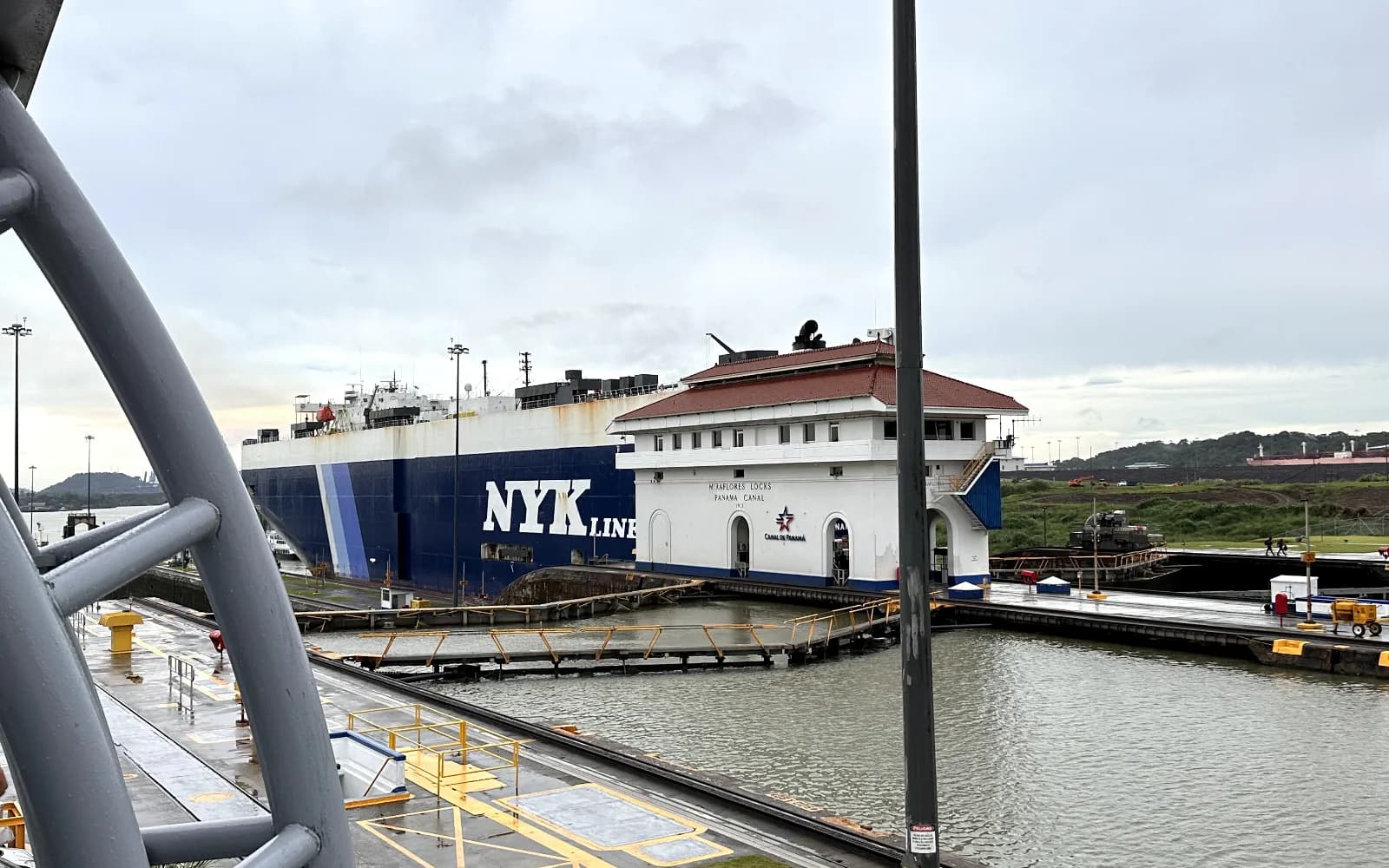
Panama Canal — Miraflores Locks
The classic viewing deck over the working locks, 20 minutes from downtown. Check the transit schedule before you go — without a ship crossing, it's a very different visit.
Interoceanic Canal Museum
In the heart of Casco Viejo, in the old Grand Hotel building where the French company set up shop. This is where the Canal's story is told from the Panamanian side rather than the builders'.
Panamá Viejo
The ruins of the city founded on August 15, 1519 — today's other anniversary. A UNESCO World Heritage site and the best place to understand why this strip of land was always a route.
Amador Causeway
Built from rock excavated out of the Culebra Cut: you're literally walking on the Canal's spoil. At sunset you can watch ships queuing to enter.
Frequently asked questions
When did the Panama Canal open?
The Panama Canal opened on August 15, 1914 with the transit of the steamship SS Ancon, which sailed from Cristobal to Balboa carrying around 200 people, including Captain John Constantine and Panama's president Belisario Porras. 2026 marks 112 years since that first official transit.
How many people died building the Panama Canal?
The most widely cited estimates put the death toll at around 25,000 across both construction eras: roughly 20,000 during the French attempt (1880-1900) and about 5,600 during the American era (1904-1914). Most deaths were caused by yellow fever and malaria, which dropped sharply after 1905 thanks to the sanitation campaign led by Colonel William C. Gorgas.
When did the Panama Canal transfer to Panama?
At noon Eastern time on December 31, 1999, under the Torrijos-Carter Treaties signed on September 7, 1977. The waterway has been run since then by the Panama Canal Authority (ACP), an autonomous entity created by Panama's constitution and organised under Law 19 of June 11, 1997.
What is the expanded Panama Canal?
The expanded Canal is the third set of locks — Agua Clara on the Atlantic and Cocoli on the Pacific — inaugurated on June 26, 2016 with the transit of the container ship COSCO Shipping Panama. It handles Neopanamax vessels and, according to the Canal Authority, had passed 31,000 accumulated transits by May 2026 and now generates more than half of the waterway's revenue.
How long does it take a ship to cross the Panama Canal?
A full transit of the 77-kilometre waterway takes 8 to 10 hours. The first official transit, the Ancon in 1914, left Cristobal at 7:10 a.m. and reached Balboa at 4:50 p.m. Before the Canal, the alternative was rounding Cape Horn — a voyage that could take up to two months.
Is August 15 a public holiday in Panama?
Not nationally. August 15 is a day off only in the district of Panama, and not because of the Canal but because of the founding of Panama La Vieja in 1519. The Canal's anniversary is commemorated but does not create a public holiday.
Sources
The dates, figures and names in this article come from the Panama Canal Authority, the body that runs the waterway, and from Panamanian public institutions.
- Panama Canal Authority — Historical overviewThe 1534 survey, the French era, the $40 million purchase of rights, the $387 million cost, the Torrijos-Carter Treaties and the 1999 handover.
- Panama Canal Authority — History in picturesThe SS Ancon transit on August 15, 1914, 24/7 operation from 1963, the millionth transit in 2010, and routes and ports connected.
- Panama Canal Authority — A decade of expansionThe 2016 opening of the expanded Canal, accumulated Neopanamax transits through May 2026 and the Rio Indio lake project.
- Panama Canal Authority — Discover the expanded CanalDimensions of the Agua Clara and Cocoli locks and the water-saving basin system.
- Municipality of Panama — Founding of Panama CityThe founding of Panama La Vieja on August 15, 1519 by Pedrarias Dávila.
Sources consulted on August 15, 2026. Transit and revenue figures are updated every fiscal year; check pancanal.com for the latest data.
You know the history. Now go and see it
130+ places across Panama, with a map, opening hours and the detail Google Maps won't tell you. Curated by locals.
Léelo en español · Leggi in italiano